
After a 2020 that was difficult in every respect, 2021 had its share of surprises in store for us: the storming of the Capitol in Washington, Italy’s victory at the Euro 2020 soccer championship, the departure of Angela Merkel after 16 years at the head of Germany, the return of the Islamic State in Afghanistan, and the coronavirus, which is still, and always, among us.
Now that December is here, the time has come to share with you the 5 books that sum up my 2021, and that brought me the most.
The 2020 edition is available here.
Here we go!
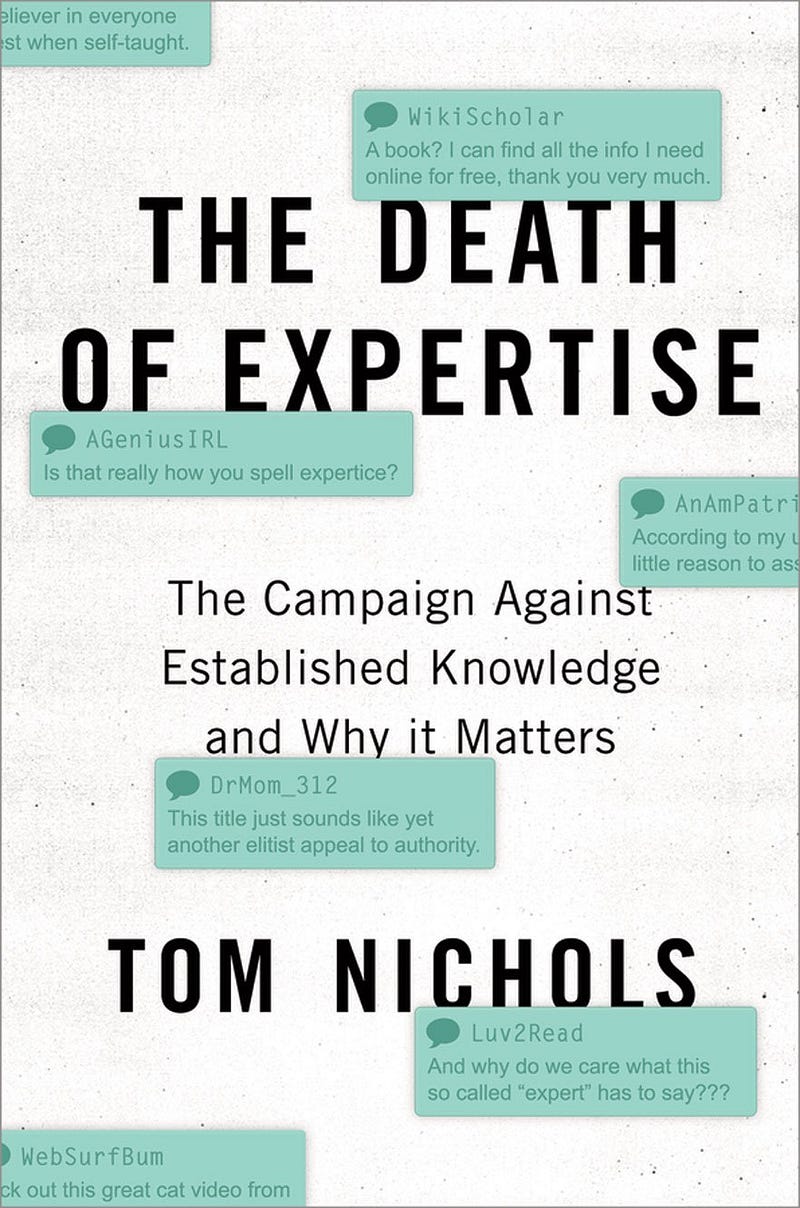
1. The Death of Expertise — Tom Nichols
The book doesn’t only lament that part of the population is becoming more and more ignorant of basic facts in science, politics, or geography. Knowledge has always been split between experts and novices, and the division of labor and responsibilities allows society as a whole to function despite these differences.
The underlying problem Tom Nichols tackles is the fierce attachment of part of the population to false ideas. On top of believing nonsense (the Earth is flat, HIV doesn’t exist, the measles vaccine causes autism…), many people reject any knowledge or information that would contradict their beliefs, and even go as far as proudly asserting their positions.
We then witness a reversal of values, where self-assured non-specialists come along to contradict and challenge experts in their very own field of expertise. Anything can thus become a matter of opinion, even scientifically demonstrable facts.
Of course, an expert can be wrong, and authorities sometimes take advantage of our credulity. But our skepticism is less and less healthy: we more and more often reject the word of experts, on the grounds that they are experts and that their views contradict our opinions.
In his book, Tom Nichols thus examines some of the roots of this problem: schools that tend to treat students as customers to be satisfied, Google, which gives the illusion that acquiring knowledge is a simple process, journalists who do too little to check the accuracy of the information they share, and all our cognitive biases that limit our objectivity.
These issues are crucial to me because they affect our cohesion as a nation. A society can only function if it shares the same understanding of what exists. If we can no longer tell facts from opinions on complex topics such as unemployment, immigration, or agriculture, how can we democratically build a country that satisfies everyone? I actually wrote an article on the link between Covid and expertise after reading this book.
Why this book is interesting:
- it helps you better understand the relationship between expertise, skepticism, and trust, and how our constant consumption of information paradoxically makes us dumber
- it describes solutions to rebuild trust with experts and authority, and each of us can and should contribute to them in order to lay the foundations of a healthy society, one able to face the challenges of tomorrow
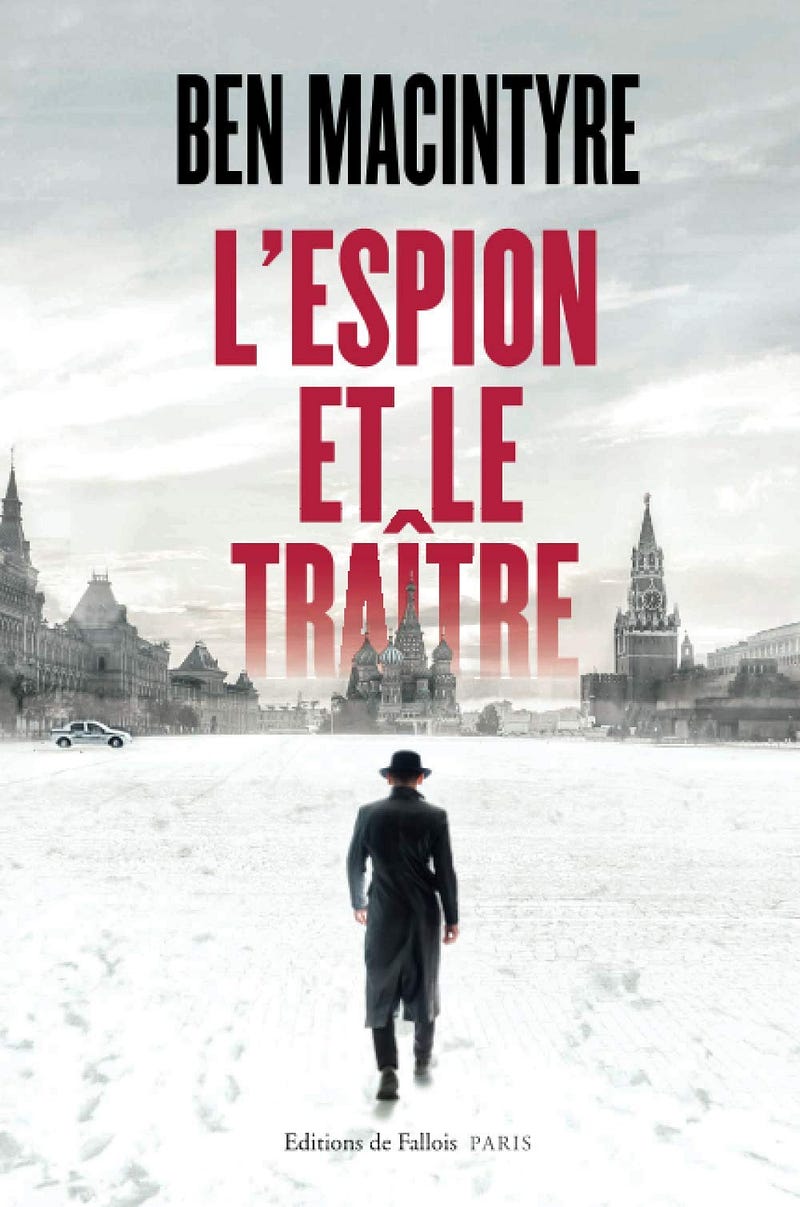
2. The Spy and the Traitor — Ben Macintyre
This novel tells the most incredible spy story of the last 60 years. The son of an NKVD officer, Oleg Gordievsky had every card in hand to become a fervent Soviet patriot. After solid training as a spy, he was sent on a mission to Berlin in 1961 on behalf of the Russian foreign ministry. The building of the Wall then left a lasting mark on him: the USSR could not be such a haven of prosperity if thousands of Russians were choosing to flee to the Western bloc. 7 years later, posted by the KGB to the embassy in Copenhagen, he watched in horror as the Prague Spring was crushed in blood. He then decided to signal his interest to Western intelligence services, with the aim of destroying the Soviet system from within. So began a decade of lies, of a double life, of sharing ultra-confidential information on how the KGB worked, its strengths and its weaknesses.
Why this book is interesting:
- This book plunges us into the heart of the golden age of espionage, of coded messages, of techniques for shaking off a tail, and of dead drops
- Based on a true story, this book gives a better understanding of the geopolitical stakes between the two blocs at the height of the Cold War, and of Oleg’s major contributions to keeping the peace
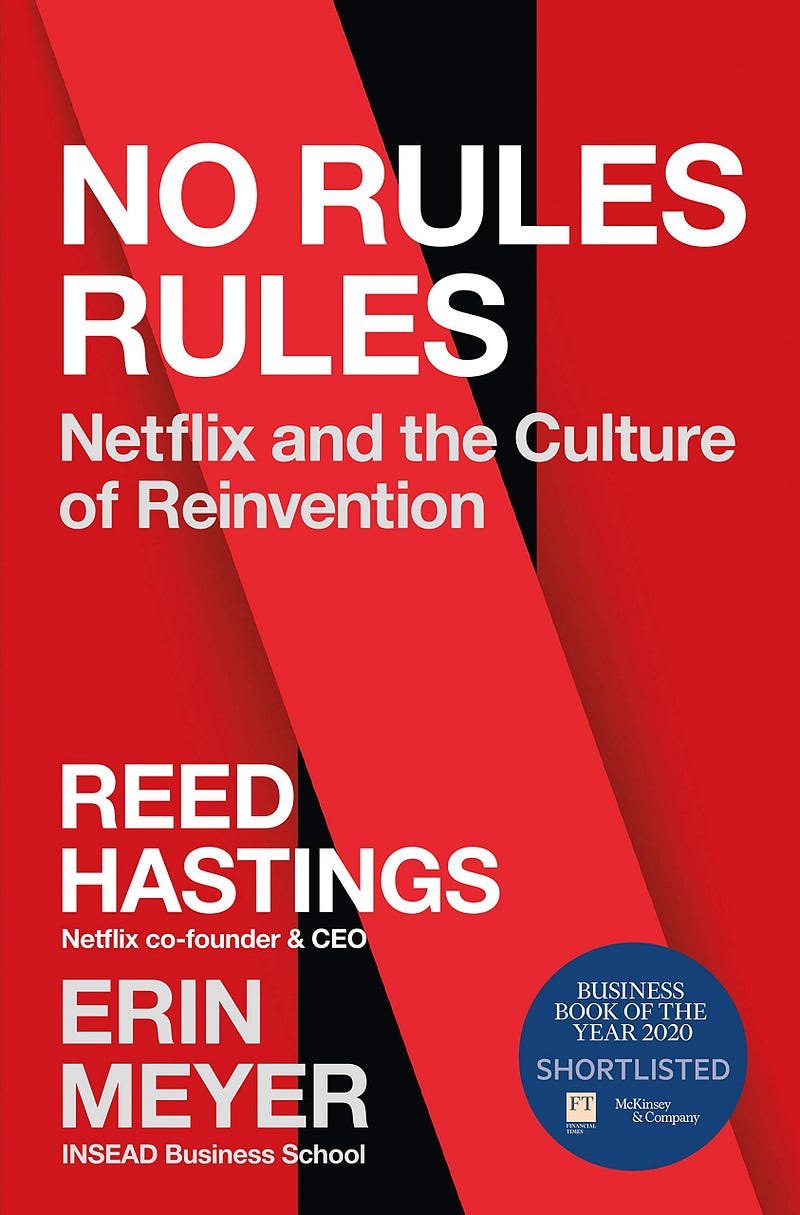
3. No Rules Rules — Reed Hastings & Erin Meyer
Netflix is an extraordinary company. Founded in 1997, it has managed to reinvent itself many times, going from DVD rentals to being one of the major producers in the film industry. Netflix disrupted the world of streaming, cinema, and entertainment, all in barely 20 years of existence. What are the keys to its success?
Reed Hastings, co-founder of Netflix, and Erin Meyer, one of the most renowned professors at INSEAD, present in this book a concept central to Netflix: talent density.
This concept emerged early in Netflix’s life when, after a financially difficult year, Reed found himself forced to lay off a quarter of his workforce. To his great surprise, the company then became significantly more productive and efficient by keeping only its “superstars”. Since that day, every internal process has had one single goal: to maximize the density of superstars in the company and to give them the widest possible scope of action.
No more limits on vacation, no more budget approvals, no more salary grids: the trust given to each employee is almost absolute. In exchange, the bar is raised, and an employee who simply meets their objectives, without exceeding them, will be let go at the end of the year (with a generous severance check).
Why this book is interesting:
- Reed forces us to question many of our beliefs about the practices that can be put in place within a company, as well as the benefits that can be drawn from them
- Understanding to what extent innovative practices deployed in creative activities (production, directing, marketing, …) can be transferred to management, administration, consulting activities…
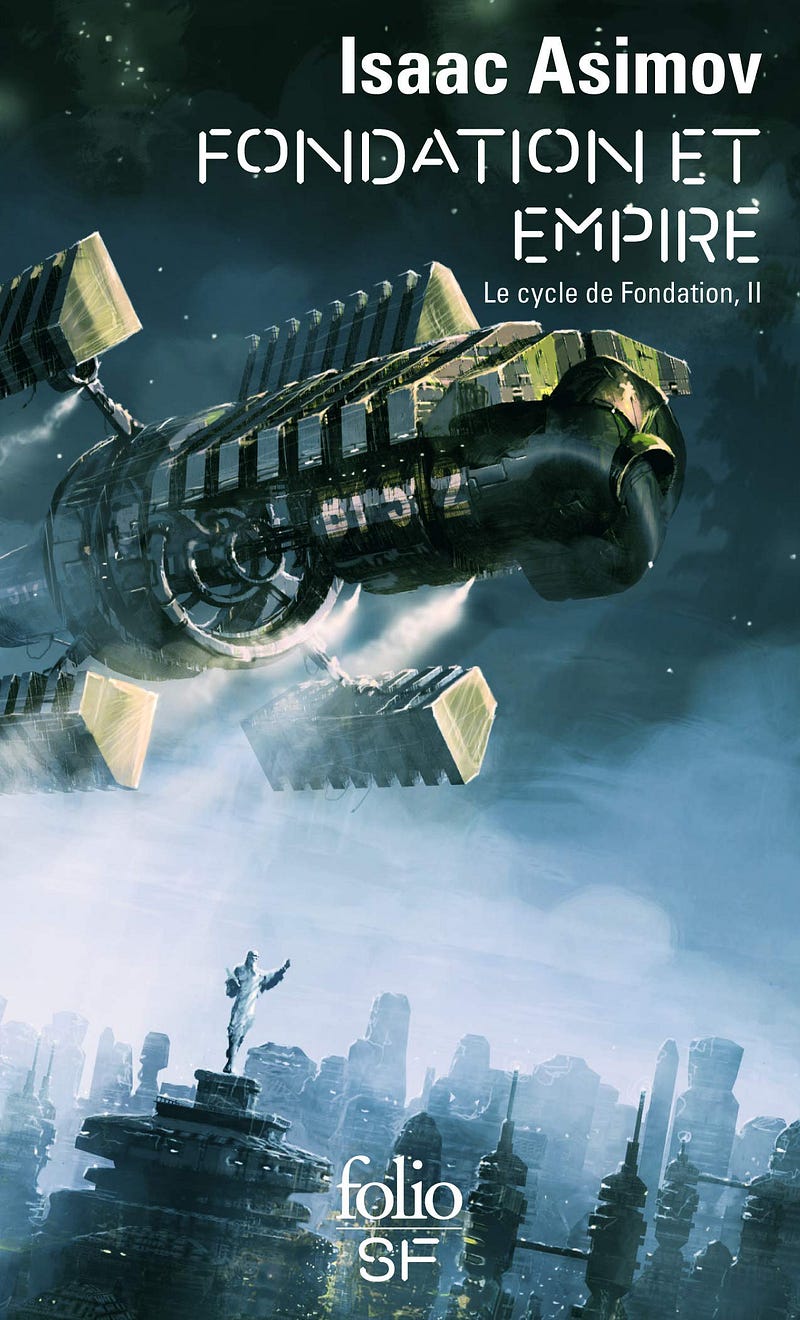
4. Foundation (the series) — Isaac Asimov
2021 was also marked by the release of a new version of Dune on our screens. For me, this movie was the moment to discover a new literary genre: science fiction. After devouring Dune, I dove into Asimov’s universe through his Foundation saga, one of the greatest classics of sci-fi.
22,000 years from now, humanity populates almost every star in the galaxy, under the authority of a central government. An illustrious scientist, Hari Seldon, then makes a major discovery: by combining his advanced knowledge of psychology, the social sciences, and mathematics, he realizes that it is possible to predict the major historical trends of a civilization. And he discovers that the Galactic Empire is going to collapse, and that 30,000 years of chaos will be needed before order and peace return. He then decides to build a foundation that would gather all the knowledge of his time in order to speed up the transition to a new golden age. Thanks to this foundation, his equations tell him, these 20,000 years of chaos will be reduced to 1,000 years.
Throughout the 5 volumes, which trace 1,000 years of History, Isaac Asimov leads us to reflect on our future, on the notions of destiny, individual freedom, and transcendence, all with an extremely well-crafted plot.
Why this book is interesting:
- Written starting in 1942, the book is surprisingly modern in its depiction of the tensions between science, religion, and finance, and of their impact on the political choices of societies
- By taking us to visit dozens of worlds over hundreds of years, Asimov paints an illuminating panorama of human nature, and pushes us toward introspection
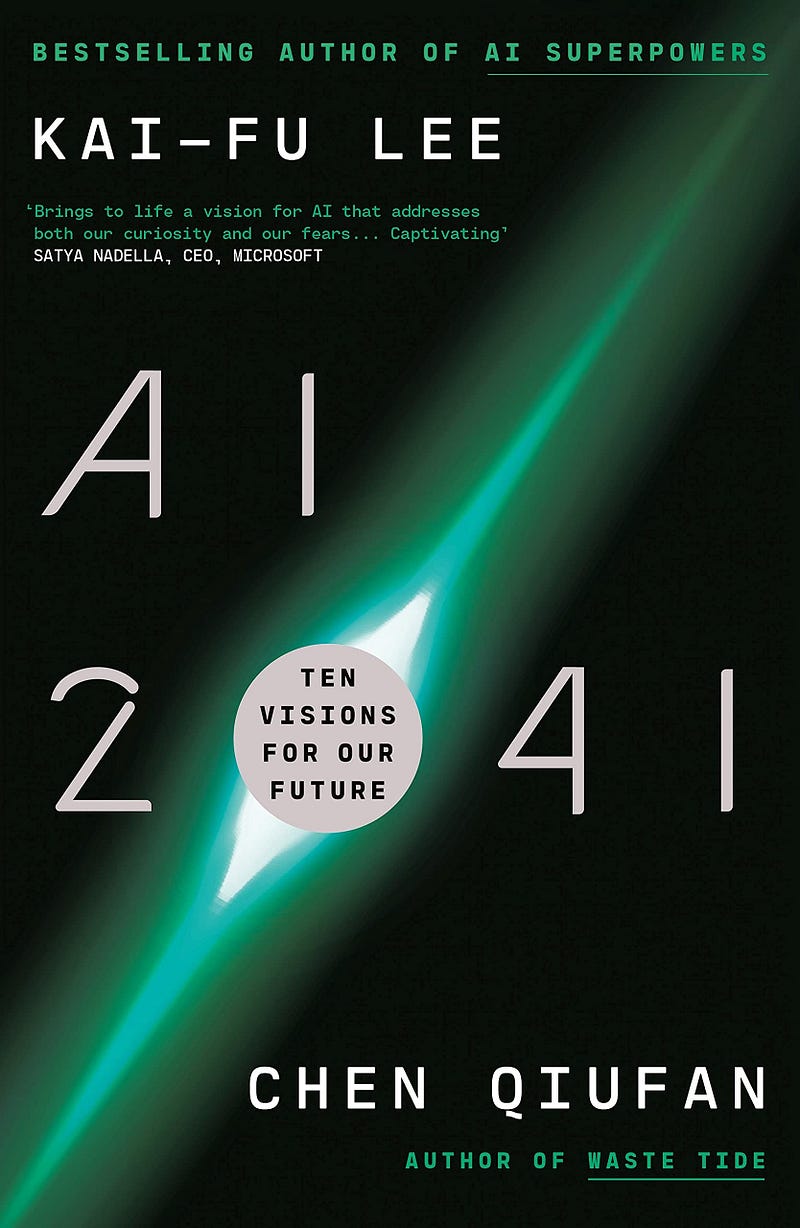
5. AI 2041: Ten Visions for Our Future — Kai-Fu Lee, Chen Qiufan
Kai-Fu Lee had already made a name for himself with his previous book “AI Superpowers: China, Silicon Valley, and the New World Order”, in which he described the impact of AI and why China was going to overtake the United States in the years to come. In his new book, he goes one step further. A bit like Black Mirror, through 10 short stories, he describes 10 possible scenarios by extrapolating to 2041 the technologies being experimented with today.
What if AIs were used to create private tutors that would adapt each child’s education to their abilities and their desires? What would the benefits be for the children? With what perverse effects? The loss of social skills? Hyper-competition?
How do we cope with the massive arrival of AI and robots on the job market? Is universal basic income a sustainable solution? What would the impact be on our societies? On money? On our pursuit of happiness?
Unlike Black Mirror, each story is followed by a critical commentary by Kai-Fu Lee, analyzing the technological developments and the societal impacts illustrated by the story. This adds a concrete touch that makes the stories even more realistic, and therefore all the more frightening.
One story, for example, examines the impact on our societies of AI becoming widespread in healthcare. “Amusing” detail: this story takes place in Shanghai in 2041, and the COVID crisis still isn’t over. Every individual has to get vaccinated every 6 months to keep up their immune defenses against the new, ever more aggressive variants that keep appearing…
Why this book is interesting:
- Each story gives us a glimpse of what the world could look like in 20 years, and therefore of the personal directions we should take now to prepare for it
- Most of the stories take place in Asia, in cities that shine worldwide through their technological and economic level, with a fierce will to move forward and innovate. By contrast, one can understand that, for the authors, our European cities, with their indecision and lethargy, will be nothing more than relics of the past by 2041

On this note full of optimism, keep learning, reading, growing, and see you next year!