The COVID-19 celebrated its first anniversary. Sad celebration of a very common virus, which in a matter of months has shaken up our lives in depth, all over the planet.
Close to 2 million deaths, billions of dollars in debt, strong restrictive measures imposed by our governments. For many of us, this is the first time we go through such a crisis.
Despite the promising announcements of a vaccine, there are few signs of rapid return to the old world “as we knew it”: a new reality has been imposed and it is likely to last.
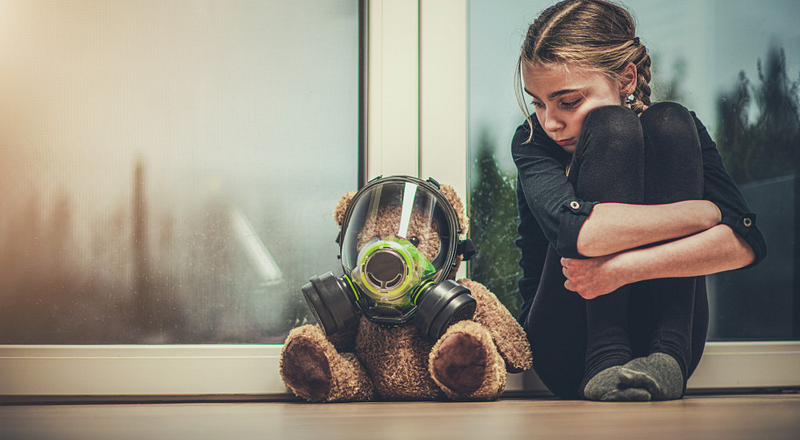
We are in shock. Our certainties collapsed and we had to learn to live differently.
And we need to understand this new reality:
Why this virus? Where is it from?
Were all of these restrictions necessary?
How can a single virus bring such technologically advanced societies to their knees?
Why is the government saying contradictory and sometimes false statements?
Why do specialists disagree on what is going on? Why do some of them reassure me while others seem to infantilize me? even despise me?
Why do I have the feeling that the experts are hiding things from me? manipulate me? that I can’t trust them anymore?
These questions are not new but the coronavirus crisis has exacerbated them. Who should we believe when scientific studies on hydroxy-chloroquine contradict each other, or when the formal demonstration of the mask’s usefulness is long overdue?
These widespread questionings have created a deep rift in society. Much of us no longer seek our answers from the experts, but increasingly from independent thinkers and “whistleblowers”.
The expertise that had been in the hot seat for a long time was killed by the coronavirus.
We will discuss in this article the following elements:
- Why technical progress makes us proportionately more stupid than our ancestors
- Our biases which prevent the good spread of expertise
- Ways to rebuild a society based on reason
1. We are proportionally more stupid than our ancestors
Almost half a century ago, Richard Hofstadter wrote that “the complexity of modern life has continued to reduce the functions which the ordinary citizen can intelligently and competently perform for himself”.
In the world dreamed by the revolutionaries of 1776, it was essential and fundamental that the common man be omnicompetent. It was felt that the citizen should be able, without too much preparation, to engage in a profession or in political life.
Today when we wake up we often start by grabbing our smartphone. Very few of us can boast of knowing how to build or even simply repair this device anchored in our daily lives. We then go through the news, and if we’re honest with ourselves, we often don’t have the knowledge to judge most of it.
Are we really competent to judge both the relevance of the government’s latest law proposal on the police force, the impact of Covid-19 on the economy, the effectiveness of the containment, the taxation GAFA, or demands from ecological associations?
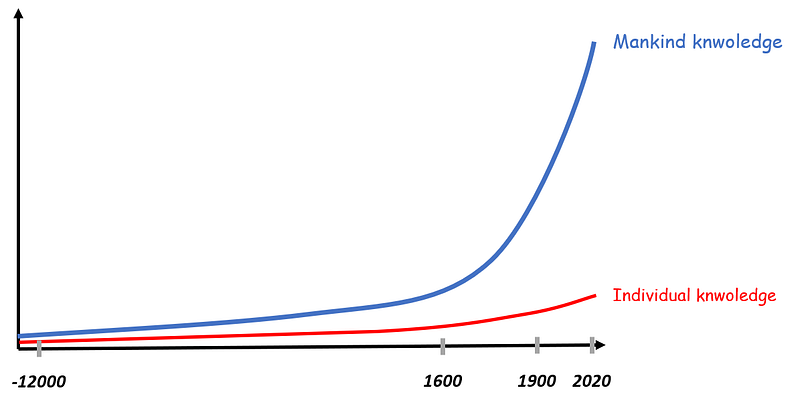
Our existence depends on a multitude of expertise developed, structured and refined by specialists over centuries. A whole life is no longer enough to become proficient in all subjects, we often have to accept not knowing.
Thus the idealized model of the omnicompetent individual no longer exists. The technical progress which has been so beneficial in all areas of our life, paradoxically makes us more and more incompetent and dependent on the expertise of others.
Logically, this exponential growth in knowledge should thus push us to be more humble, to give more importance on a given subject to experts in this subject.
But we are seeing exactly the opposite.
2.1 Bias n ° 1: The fuzzy gradation of expertise
Let us return to the central question: What is an expert? How to identify it?
4 criteria can be used to recognize an expert: education, experience, talent and recognition from peers. The expert is the one who has set out to train on a given subject, to practice it, in order to exceed the average competence of the population. But becoming an expert is not binary, there is also a gradation in expertise: knowing a subject is not the same as understanding it in depth.
There is a margin between the good amateur singer who wishes to make it his profession, and the singing teacher who trains his students. The latter has reached a much more advanced level of expertise. Likewise, among the “experts” that are the singing teachers, the young graduate teacher is not at the same level of skills as the teacher of a reputable conservatory. And the same goes for all subjects of expertise.
Mastering a subject better than the average does not mean becoming a reliable source of advice on that subject. A journalist, a politician, a philosopheror a film actor have no expertise in determining the effectiveness of a medical treatment.
And this confusion is reinforced by the arrival of the Internet and social networks.
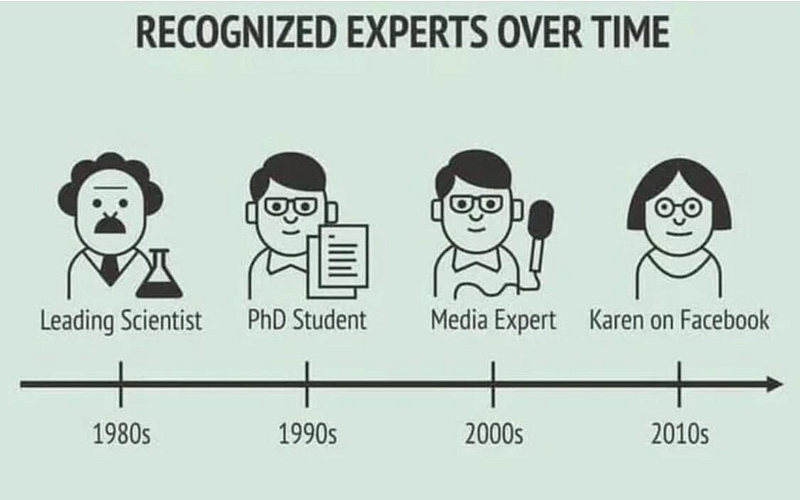
On the Internet, everyone can express themselves on an equal footing. A high school student can answer a Nobel Prize in physics and question their expertise on the Big Bang. A “Karen” can go against a nutritionist’s recommendations on infant milk consumption and tout the merits of coconut milk for babies.
2.2 Bias n ° 2: The pleasant wins over the truth
In a world where all voices are expressed widely, the most listened speech is often the most pleasant one, and not the most truthful. In this war for attention, experts systematically lose in the face of less scrupulous communicators.
Already Socrates in Gorgias reproached these manipulations with sophists and rhetoricians. By their art of handling speech, they boasted of being able to direct the crowd in the direction of their choice and thus acquit a guilty man if they wished. But throughout his exchanges with Gorgias and Polos, Socrates will demonstrate that the only right speech is the speech that teaches the truth, or pushes the crowd to do good.
He thus takes the example of the cook who, like the sophist, would prepare sweet and pleasant dishes for children and thus gain their support. For his part, the philosopher would be like the doctor, determined to recommend a balanced diet by proposing to incorporate vegetables into the menu, but only reaping contempt.
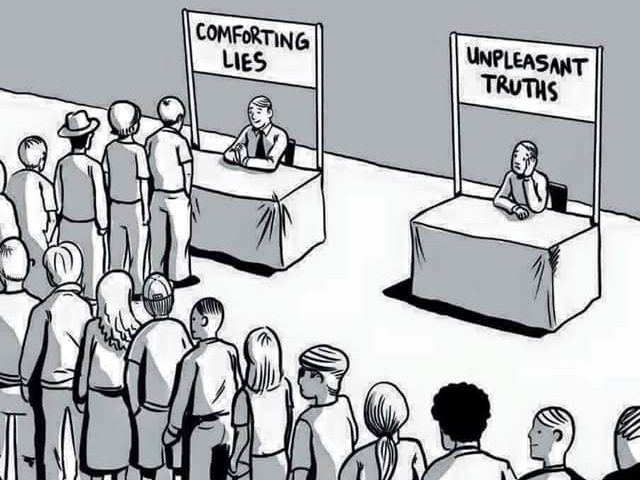
According to Socrates, it is the responsibility of every man to produce a speech of truth and not to produce food that would satisfy the mouth but harm the body.
Of course, this purity of speech may seem futile today in a world of Instagram and Tiktok, especially when we know that Socrates failed to avoid being illegitimately condemned to his own death with his discourse of truth…
It is a constant feature of human nature, we prefer pleasant speeches which reassure us, to speeches which teach us a truth at the risk of upsetting us. Thus, we will never see a renowned professor of geopolitics fill a stadium with 80,000 spectators.
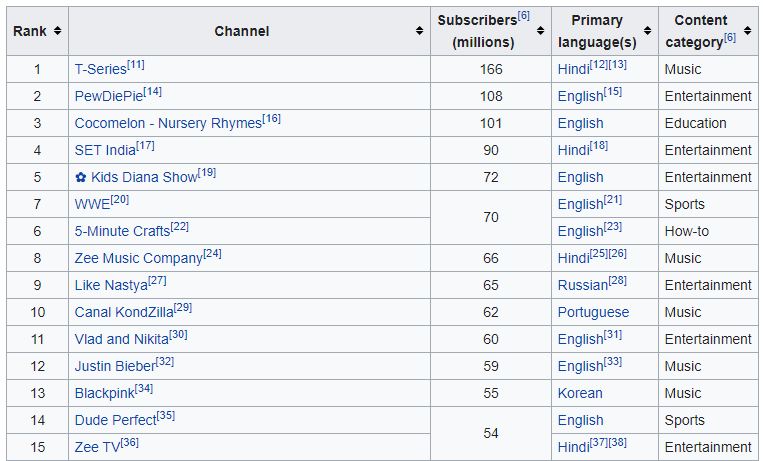
This phenomenon is also observed in the ranking of the most popular Youtube channels. Among the 15 channels with the most subscribers, there are gaming, entertainment, music, sports, but no content explicitly dedicated to learning, or to the popularization of science.
Channels that strive to promote informative, objective, sourced but also fun content are struggling to exceed a few hundred thousand subscriptions.
2.3 Bias n ° 3: The certainty of the neophyte against the doubt of the expert
Another bias of human nature is gradually destroying expertise: the Dunning Kruger effect. In a study published in 1999, Dunning and Kruger explain that people with the lowest qualifications in a field tend to overestimate their skills in that field. And conversely, the most qualified people tend to underestimate their skills.
These studies carried out on a wide variety of activities (reading comprehension, driving a vehicle, playing chess, tennis) suggest that this bias can be generalized to all areas of expertise.
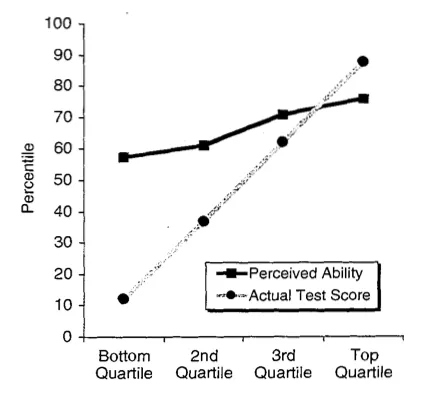
These biases have several consequences:
- Incompetent people fail to realize their own level of incompetence
- Incompetent people have difficulty recognizing the competence of skilled people
- A significant improvement in their skill level is necessary to realize their past limitations.
More recently, an experiment was carried out to test this bias between expertise and certainty. During the invasion of Russian forces in Ukraine in 2014, 2,066 Americans were asked about the response to be taken by the US government.
In addition to this question, a second test has been added: locating Ukraine on a world map. Result?
- only 1 in 6 Americans knew where to locate Ukraine on a map
- The greater the distance from the true location of Ukraine, the more the respondents were in favor of an armed intervention by the United States
Conclusion? Despite their manifest incompetence on a strategic issue,respondents were more inclined to promote a definitive choice(declare war) than more competent people.
If we multiply this example in all areas of expertise and current affairs, we can question the relevance of generalizing popular referendums without a solid upgrade of the entire population.
2.4 Bias n ° 4: Simplicity wins against complexity
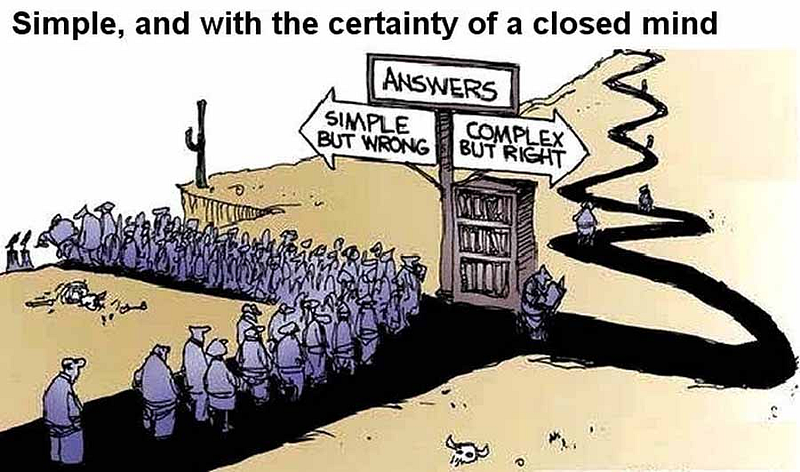
A 4th bias has been reinforced by the coronavirus crisis, and is gradually killing the recognition we give to experts. Lost in a world that is becoming more and more complex, in addition to being attracted by pleasant answers, we prefer simple and definitive explanations.
For example, to a complex question: “Why unemployment?” we often prefer simple answers as:
It’s capitalism and its quest for profit!
No, it is the unemployed who benefit from the system!
No, it is because the labor market is too rigid!
No, it is job seekers who are not trained and skilled enough!
Whereas the real explanation is often a complex balance of all these answers, balance which depends on the precise circumstances of a country, a community. And it is precisely the job of experts to study these phenomena in more detail and to provide a specific and therefore more nuanced answer.
But faced with the argued speech of an expert who wants us to understand the complexity of a subject, simple and hammered speeches (“the vaccine is bad, it’s Big Pharma”) often have more impact.
Thus Alexis de Tocqueville said already in the 19th century that “it was easier for the world to accept a simple lie than a complex truth”. Today, hashtags, tweets and other notes trap us in short, simplistic and therefore false answers.
2.5 Bias n ° 5: Our social and emotional insecurity
5th and last bias that we will address here: we rarely dare to admit our ignorance on a given subject.
This bias translates very concretely as follows: in a conversation, we often consciously give our opinion even on subjects that we do not understand.
As social animals, we instinctively seek approval from those around us. In this logic, admitting our ignorance would mean showing our weakness and therefore risking being rejected by the group. We thus often feed the exchanges with empty opinions without real foundation. We unintentionally pollute the debate to show that we have an opinion, and that we are worth something.
This effect is all the more perverse as, according to the Dunning Kruger bias cited above, we tend to be more sure of ourselves and therefore more vocal.
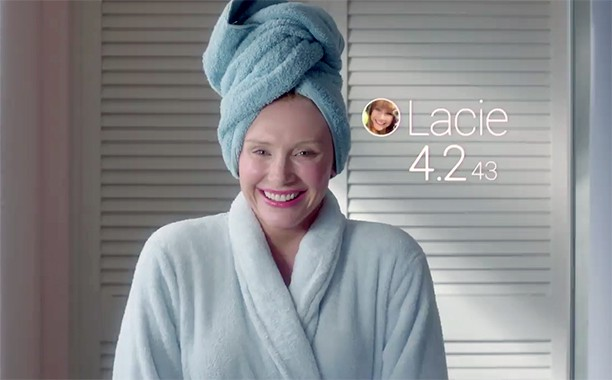
One can then wonder why the knowledgeable do not simply ask the less competent to adopt a “listening posture” in order to better understand a subject before expressing themselves?
But the zealous expert comes up against the same social constraints as the talkative fool:
Who would like to exchange with an expert who tells us why we are wrong and why our ideas are erroneous, simplistic, obsolete?
Quite quickly this zealous expert would find himself alone, or surrounded by other experts who had suffered the same fate. Our social and emotional insecurities thus prevent the expert from imposing his enlightened opinion as well as the lay people from listening to him.
Conclusion
A world where expertise no longer has its place?
If we summarize, the coronavirus, by plunging the world into incomprehension and ignorance, accelerated the death of expertise in the public debate for at least 5 reasons:
- The gradation of expertise is increasingly more fuzzy
- Truth and facts attract less than pleasant speech
- Neophytes systematically overestimate their skills
- Qualified reasoning is less attractive than simplistic opinions
- Our social and emotional insecurity prevents us from admitting our ignorance
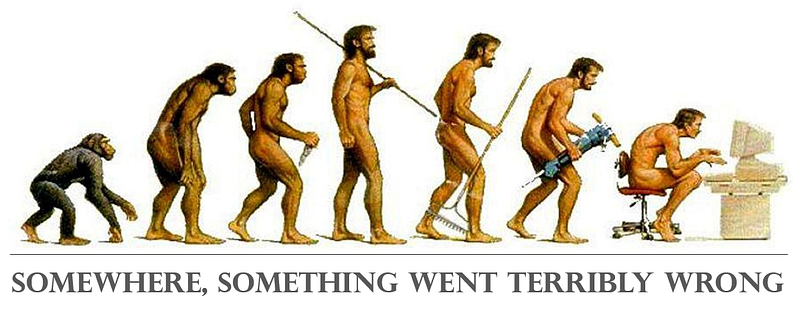
If we continue in this direction, what would become a world where expertise and facts no longer has their place in public debate?
What would a world look like where we systematically question the advice of doctors, climatologists, nuclear engineers, geneticists, astrophysicists?
As a society we risk the same harms as the naked emperor in Andersen’s tale. Too proud to question ourselves and accept the truth and facts as they are, we risk locking ourselves into our bubble of ignorance, incompetence and fake news.
And the little boy who will tell us “but, you are naked!”Will certainly take the form of a popular uprising by a part of society that does not want to get out of its bubble of “alternative facts”or of a global ecological crisis, the consequence of endless debates on the reality of global warming and its solutions and which would have prevented us from making the right decisions.
How to get out of this impasse?
To get out of this impasse, there is only one solution: education of young people and adults.
In school, students should learn to develop critical thinking skills and the importance of cognitive biases. Acquiring a general culture and a scientific base is no longer sufficient to become a free actor in our society. The acceleration of knowledge and the complexity of the challenges to come often make this base obsolete after a few years (if it has not evaporated). Withholding facts, and regurgitating them without critical analysis is no longer an option. Learning to learn, learning to judge, learning to criticize are skills that we absolutely must teach our children.
But training cannot stop with school. Many players continue this teaching on social networks or on Youtube. Vsauce, Crash Course, Veritasium, Big Think, In a Nutshell, in fields as broad as nature, philosophy, history, economics, physics, or finance are essential relays to maintain a sharp look and better understand our world. More generally we should be inspired by the contributions of zététique, “preventive hygiene of judgment” which encourage us to take a step back from the sensational and privilege our reason.
And beyond the recognition of expertise, it is the stability of our country and the proper functioning of democracy that are at stake. Our political system assumes that each of the citizens can elect their representatives and decide the broad political orientations independently of any harmful influence.
If we continue to vote without knowing what inflation is, how our agriculture works, or how our energy is produced, our country will become like the Emperor of Andersen, upright, proud, but naked.