“How does a society get out of a downward spiral of confusion and fear? With its opposite: an upward spiral of awareness and courage.”
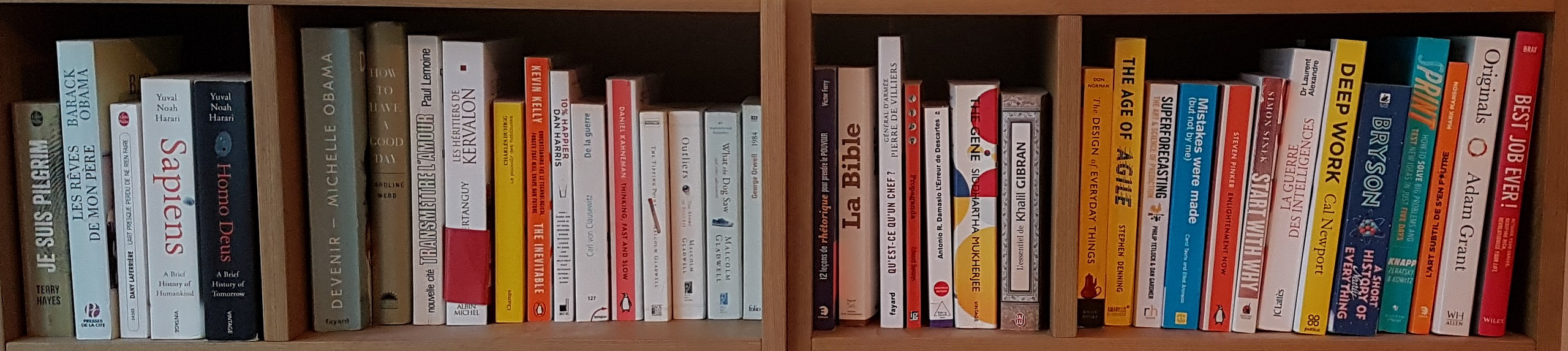
2023 was a very dense year, both in terms of geopolitical news and in my personal life. Between the Ukrainians’ arduous counteroffensive, the terrorist acts of Hamas in October, and the earthquakes in Morocco and Turkey, 2023 did not spare us. Not to mention France’s defeat at the Rugby World Cup.
In this rather dark context, here are the 5 books that left their mark on me, that made me laugh, that made me cry, in short, the 5 books that are, for me, the most representative of the year 2023.
1. The Attack, Yasmina Khadra
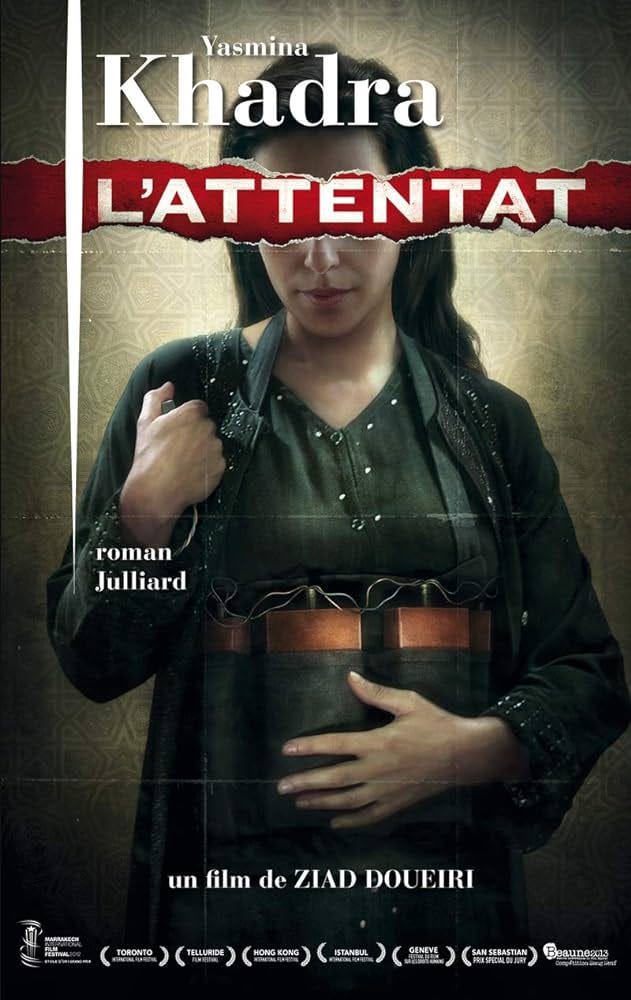
An Arab couple, Amine and Sihem, has been living in Israel for about ten years. Amine is chief surgeon at the largest hospital in Tel Aviv, and the two of them live in a magnificent house overlooking the city.
While Sihem is away visiting her family, a bomb goes off in a Tel Aviv restaurant. At the hospital, Amine sees the many victims pouring in. Amid the tears and the blood, he operates and saves lives until evening, before going home, on the verge of exhaustion. Unable to reach Sihem, however, Amine starts to worry. Late at night, he gets a call asking him to come back to the hospital. He is then told that his wife died in the attack, but that she is also the one who blew herself up.
In a few seconds, Amine’s world collapses. How could the woman he loves have committed such an atrocity? There must be a mistake. So begins Amine’s journey, in which he retraces his wife’s steps: her contacts in Palestine, her convictions, her disillusions, her double game, which drove her to commit this horrible act.
Why should you read this book?
In this period of renewed tension between part of the Arab world and Israel, this book lets us enter the intimate lives of the people at the heart of this conflict. It helps us better understand (without excusing them!) the rationale of these people who would rather blow themselves up and take dozens of lives with them. It brings a fresh perspective to a debate that is all too often black-and-white, where each side sees the other only as the monster to be slain.
2. La horde du contrevent [The Horde of the Counterwind], Alain Damasio
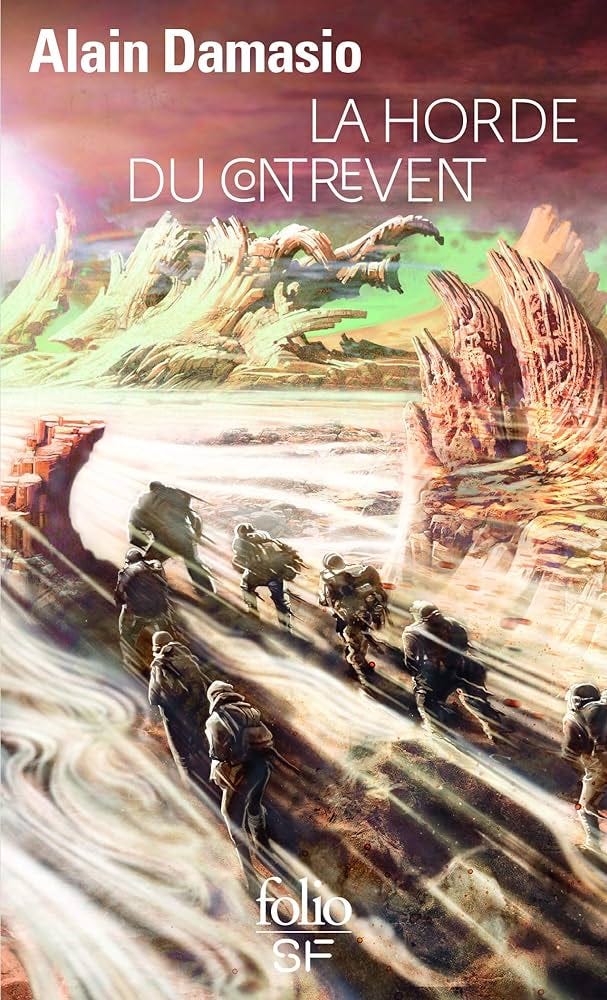
There are twenty-three of them, they form the thirty-fourth Horde of the Counterwind, and they are between twenty-five and forty-three years old. In a world swept by winds, they have been trained since childhood for one single purpose: to travel across the world, from west to east, from the Downstream to the Upstream, against the current, facing the wind, across plains, water, and icy peaks, to reach the mythical Far Upstream, the source of all winds.
All different but all united, they form an autonomous and tight-knit horde, which advances toward a single goal, constantly fighting against the wind. Drawing on the knowledge and experience of eight centuries of failures, it is said to be the best and the ultimate Horde, the one that will finally reach the Far Upstream.
Why should you read this book?
For the narrative form:
Each paragraph of this adventure is told by one of the 23 protagonists, with their own narrative tics. The whole story is lived in the present tense from the point of view of the characters, who are fighting for their survival. You really feel like you’re with them, your face scratched by the gusts. The story is thus very dynamic, very alive, even if this mental gymnastics (who’s talking in this paragraph??) isn’t necessarily easy at first.
For the substance:
Alain Damasio offers a rich and coherent world, with strong characters of great subtlety. You very quickly grow attached to the heroes, and to their quest with all its twists and turns. It makes you question destiny, our choices, peer pressure, sacrifice, death…
3. The Count of Monte Cristo, Alexandre Dumas
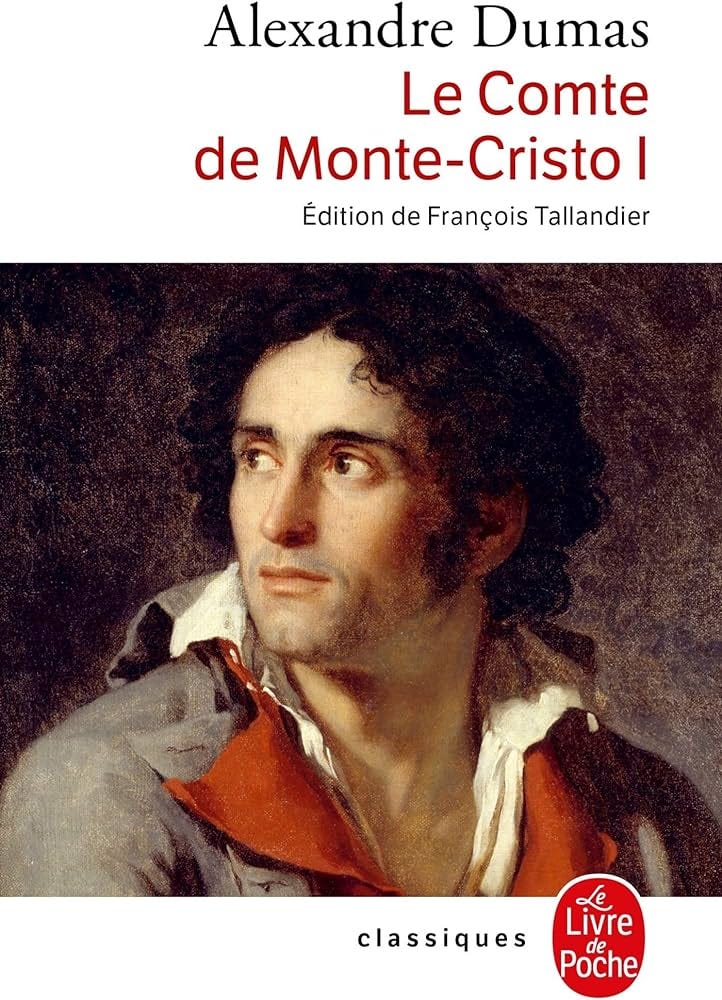
As he returns from a voyage at the helm of a merchant ship, young Edmond Dantès is arrested on the day of his engagement. The reason? 3 men jealous of his success have fabricated from scratch a false accusation of collusion with Napoleon against the king. Edmond is then sent, without explanation, to the prison of the Château d’If, into the cold and the darkness, forgotten by the world of the living.
In this prison hell, Dantès meets the Abbé Faria, a scholar and a prisoner himself, who not only teaches him a wide range of knowledge, but also reveals to him the existence of a priceless treasure hidden on the island of Monte Cristo. This revelation marks a turning point in Dantès’s life. After a spectacular escape, he finds the treasure and transforms into the mysterious and fabulously wealthy Count of Monte Cristo.
With his new identity and his colossal fortune, Edmond returns to society, hiding his true intentions behind a façade of nobility and generosity. One by one, he confronts those who betrayed him: Danglars, the man who envied his professional success; Fernand, the romantic rival who coveted his fiancée Mercédès; and Villefort, the magistrate who, to protect his own reputation, unjustly condemned him.
Why should you read this book?
A monument of French literature, we have all more or less read it in our youth or seen old versions of the movie. But rereading this story as an adult lets you better understand and appreciate what is, in the end, a very dark tale. You better grasp our hero’s emotional journey: the most complete incomprehension, which turns into cold anger, then into a sinister hope that sows death.
Each confrontation with his enemies is a mix of strategy, suspense, and surprising revelations. Dumas skillfully weaves the threads of the plot to create a story rich in emotion, where Dantès’s thirst for revenge is constantly counterbalanced by his intrinsic qualities of compassion and humanity.
4. The 6 Types of Working Genius, Patrick Lencioni
Bull Brooks is an accomplished businessman, but he has a problem. Despite numerous career changes, he constantly finds himself exhausted and irritable toward the people around him. After one of his employees gives him particularly critical feedback about his changing moods, Bull and the members of his team identify which tasks they love and which they hate at work.
Through this quick fable, Lencioni explains that there are different types of “talents”, and that each person is naturally gifted for some of these talents. Each talent helps people excel at one of the six essential activities required in any project, from developing your next product to planning a family vacation to organizing a summer fundraiser for a nonprofit.
Here is the list (in English, because translation doesn’t do them justice):
- Wonder: Perceiving Opportunity
- Invention: Innovating Solutions
- Discernment: Vetting Ideas
- Galvanizing: Mobilizing People
- Enablement: Supporting
- Tenacity: Seeing Things Through
According to Lencioni, the average individual excels at two of the six forms of talent. Of the other four, they are competent or capable in two, and frustrated or drained by the remaining two.
Why should you read this book?
As in many of Lencioni’s books, the fable at the beginning of the book lets us gradually take in the concepts he wants us to discover. And, as always, Lencioni manages to synthesize, through simple concepts, intuitions that we all more or less have.
This concept of “Genius” is thus useful on two levels:
- understanding yourself: which activities give me strength, which activities wear me out and drain my energy
- understanding team dynamics, and therefore anticipating potential difficulties. If no one on a team has the genius of “seeing things through”, no wonder all initiatives, even the most promising ones, are left hanging
5. What’s Our Problem?, Tim Urban
Our society is going through an existential crisis. While we must face ever greater challenges together (climate change, terrorism, viruses…), we are more and more divided, unable to calmly discuss the right solutions to bring. Our politicians lock themselves into belligerent postures, we no longer trust them, and tensions between communities keep rising. And with our new technologies, our capacity for destruction is also growing exponentially.
What happened? How do we get out of this crisis? That is the goal of this latest book by Tim Urban.
To answer these complicated questions, he introduces and makes extensive use of many concepts:
- The Two Minds: a primitive, tribal mind versus a mind of reason and intelligence
- The Two Selves: what we say out loud versus what we really think
- The Thinking Ladder: the way we approach an idea, as an enlightened scientist or as a convinced zealot
- Intellectual Cultures: Echo Chamber versus Idea Lab
- Emergence Tower: a set of small things that come together and form a giant capable of doing more than the sum of its parts
Why should you read this book?
First of all, because Tim Urban is, in my opinion, the most brilliant author/blogger of our generation. His blog WaitButWhy is an inexhaustible source of “AhA moments”, and this book is the result of 6 years of relentless work.
In it, he synthesizes all the concepts essential to truly understanding the problems of our society, and to bringing solutions. It goes much further than the:
- “it’s the fault of the rich/ journalists/ Arabs/ Black people/ Jews/ women/ old people/ young people/ gay people” or of the left/ the right/ the wokes/ the far right
- or the “there’s nothing we can do, it’s genetic/ our brains/ our culture”.
Here is his illuminating conversation about this book with Lex Fridman:
And for latecomers, here are the links to my recommendations for 2022, 2021, and 2020.
Happy New Year and happy reading!