For the 5th year in a row, the time has come to present my 5 books of the year, the 5 books that moved me, shook me, made me travel, made me question things, in short, the 5 books that helped me move forward and be a little better today.

1. 1Q84 — Haruki Murakami
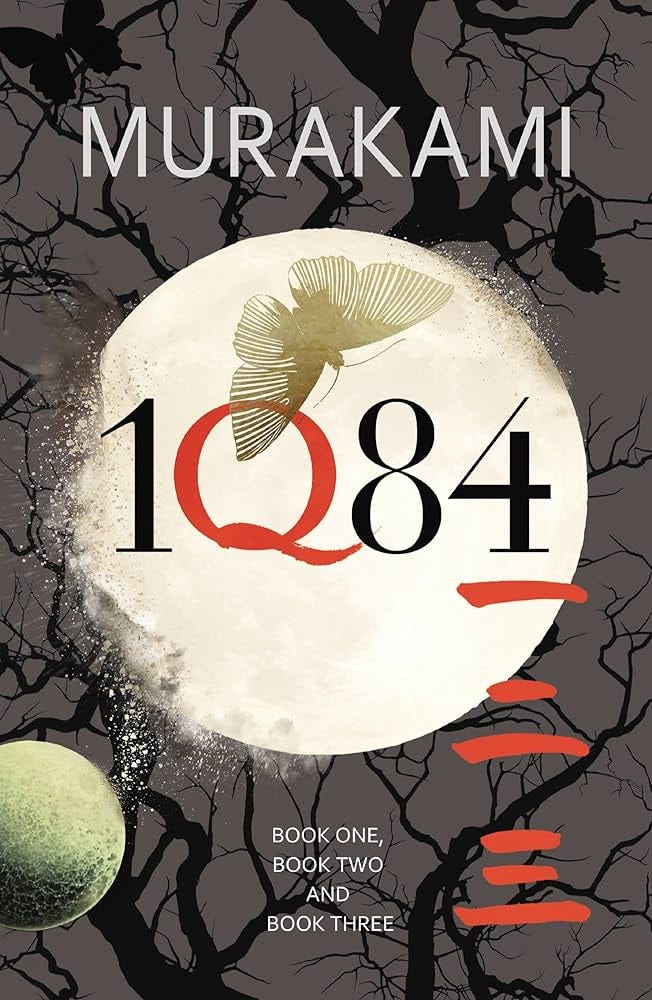
My real favorite of this end of 2024, 1Q84 is one of those books that had been recommended to me for a long time, sitting on my shelf for years but never opened. To be fair, the back cover doesn’t exactly make you want to read it: it talks about a hypnotic world, shadows, destinies, and a secret pact. “Another strange novel recommended by that slightly peculiar aunt”.
And that was a very big mistake.
1Q84 follows 2 thirty-somethings, Tengo and Aomame, who were in the same class at school many years before. Without ever being friends, or even really talking to each other, they both remember with emotion the day they held hands. Today, Tengo is a math teacher at a small high school in Tokyo, and is trying to write a book worth being published by his editor friend.
Aomame is a fitness coach, with a keen knowledge of the human body. She has sworn to put her skills to use to take revenge on men who abuse their wives. Until the day when, after coldly murdering a man in a hotel room, she looks up and sees two moons in the sky.
Why should you read this book?
This book is a bit like a nice hot bath in the middle of winter. After a few seconds of adjustment, you enter a warm and intoxicating world, where the author takes you on a journey carried by the sensations and emotions of the characters. With the 2 following volumes, H. Murakami gives us a breathtaking tale to live through, full of tenderness and subtlety. Let me especially highlight his sense of the right word, of phrasing and of rhythm, which makes it a very pleasant read. I’ve already bought 3 more of his books, and I don’t regret it one bit.
2. Bienvenue en économie de guerre [Welcome to the War Economy] — David Baverez
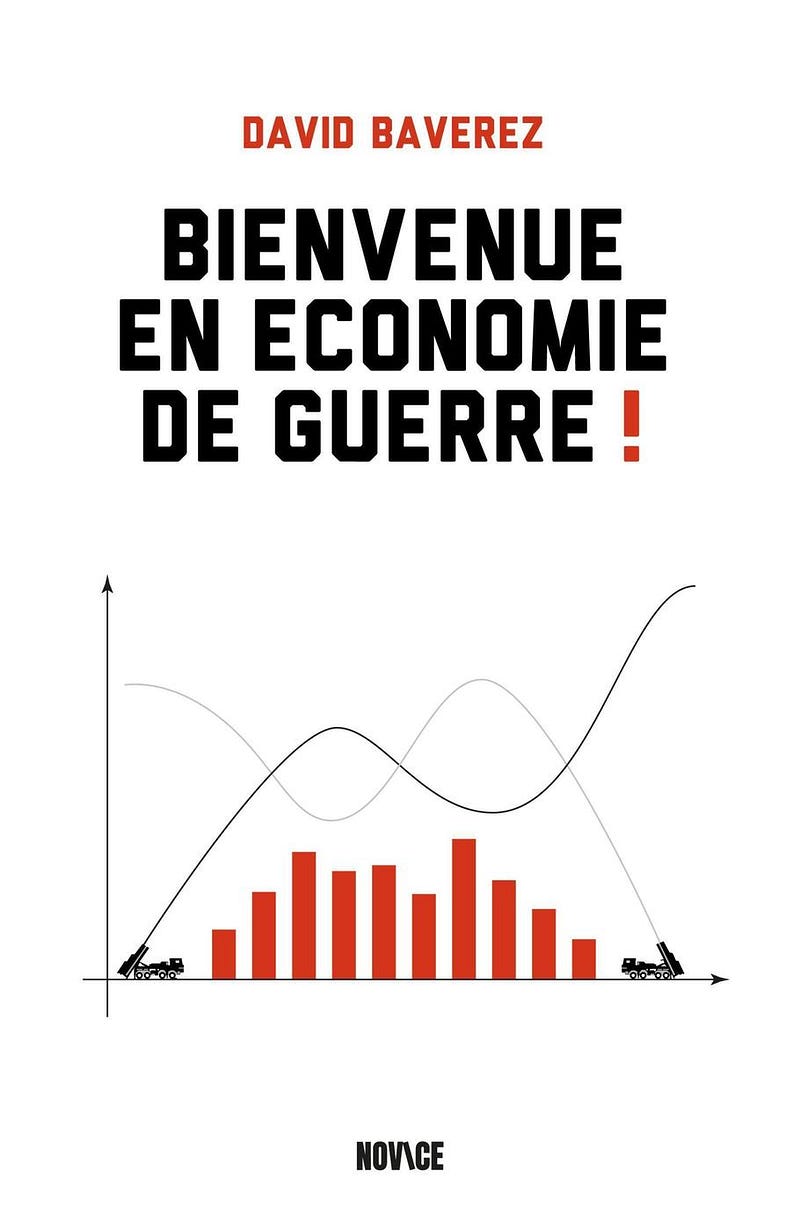
A change of atmosphere for this 2nd book. When he appeared on Matthieu Stéfani’s podcast, David Baverez said he would reimburse any of his readers who didn’t change something in their life after reading this book. And indeed, how could you stay unmoved by this read?
In it, he tells how, since the COVID crisis, we have shifted paradigms. Globalization as we knew it (characterized by a relatively free movement of capital, goods, and people) is being called into question. Governments and companies are no longer driven by a logic of profitability and cooperation. They no longer hesitate to crush their suppliers, to get around international rules, at the edge of legality, to advance their own pawns.
He advocates breaking with a certain naivety toward the great powers (notably the United States and China) and rolling out ambitious public policies — for example in semiconductors, the energy transition, and innovation.
According to him, the “war economy” requires speed and determination in public decisions, or else we risk falling behind industrially against other major economic zones that are more pragmatic.
Why should you read this book?
The essay puts into perspective the war in Ukraine, the energy crisis, the pandemic, and the acceleration of the Sino-American rivalry to show how closely all these phenomena are linked and how they are redrawing the global economic map. Although the term “war economy” may seem alarmist, Baverez uses it above all to underline the urgency and seriousness of the situation, while offering ways to rebuild a more robust and more sovereign growth model. He invites us to reflect on the strategies to implement to face a less stable world, where competition and the pursuit of industrial independence become paramount.
3. The Three-Body Problem — Liu Cixin
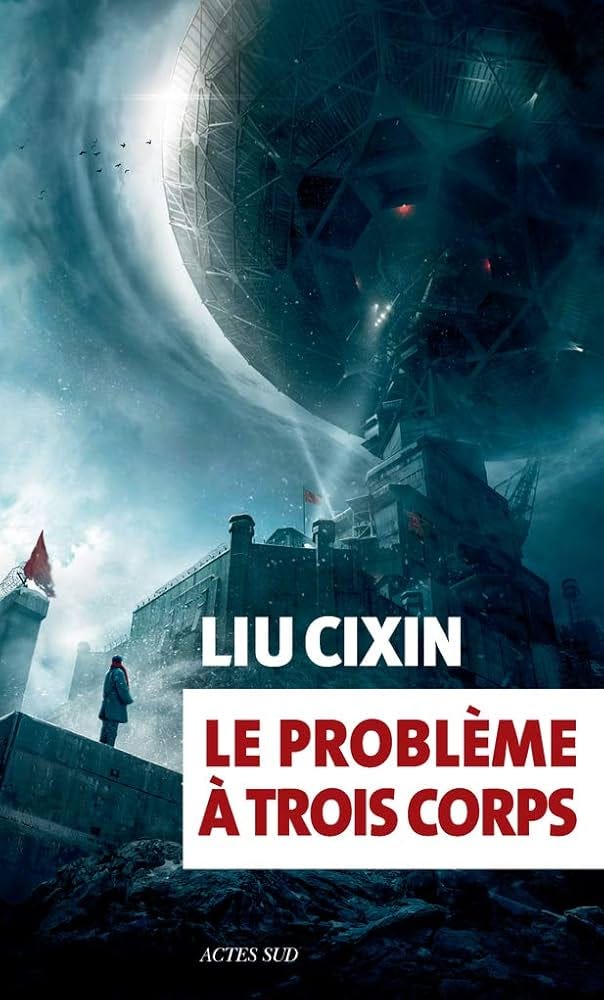
After the release of the Netflix series of the same name (which I warmly recommend), I was very frustrated to learn that the sequel wouldn’t come out for several years (if it ever does). And I absolutely wanted to find out how this story ends. So I dove into this very famous science fiction book.
In the midst of the Chinese Cultural Revolution, science becomes both instrumentalized and silenced. The few intellectuals who resist are massacred and imprisoned. After witnessing her father being beaten, Ye Wenjie loses faith in humanity and seizes her chance a few years later. She diverts scientific facilities to secretly send a call out into space.
Millions of billions of km away, an alien civilization struggling with the chaotic dynamics of a star system with three suns picks up this signal. It sees in it the opportunity to find a new, more hospitable Earth. But how should it answer? And above all, what should it do with humanity, a species as inventive as it is dangerous?
Many years later, when Wenjie is now an old lady, strange phenomena start to occur: eminent researchers commit suicide, rumors of signals from elsewhere circulate. Humanity then discovers that it has only a few years left before the arrival of a presumably hostile civilization that knows everything about it, because of a traitor, Wenjie.
Why should you read this book?
Much richer and more precise than the series, this book takes us to the heart of the Chinese revolution, and realistically depicts what would happen if all of humanity learned of the existence of another civilization, a threatening one because it is itself in distress. Between those who want to defend the Earth and those who, disgusted with humanity, want on the contrary to put themselves at the service of another civilization, the philosophical and political tensions raise questions about the place of humankind, our sense of justice and of good. And, interstellar distances being what they are, the book carries us across hundreds of years, where we can measure the long-term consequences of these debates. You could almost draw a parallel with how we are handling the climate crisis…
4. Permutation City — Greg Egan
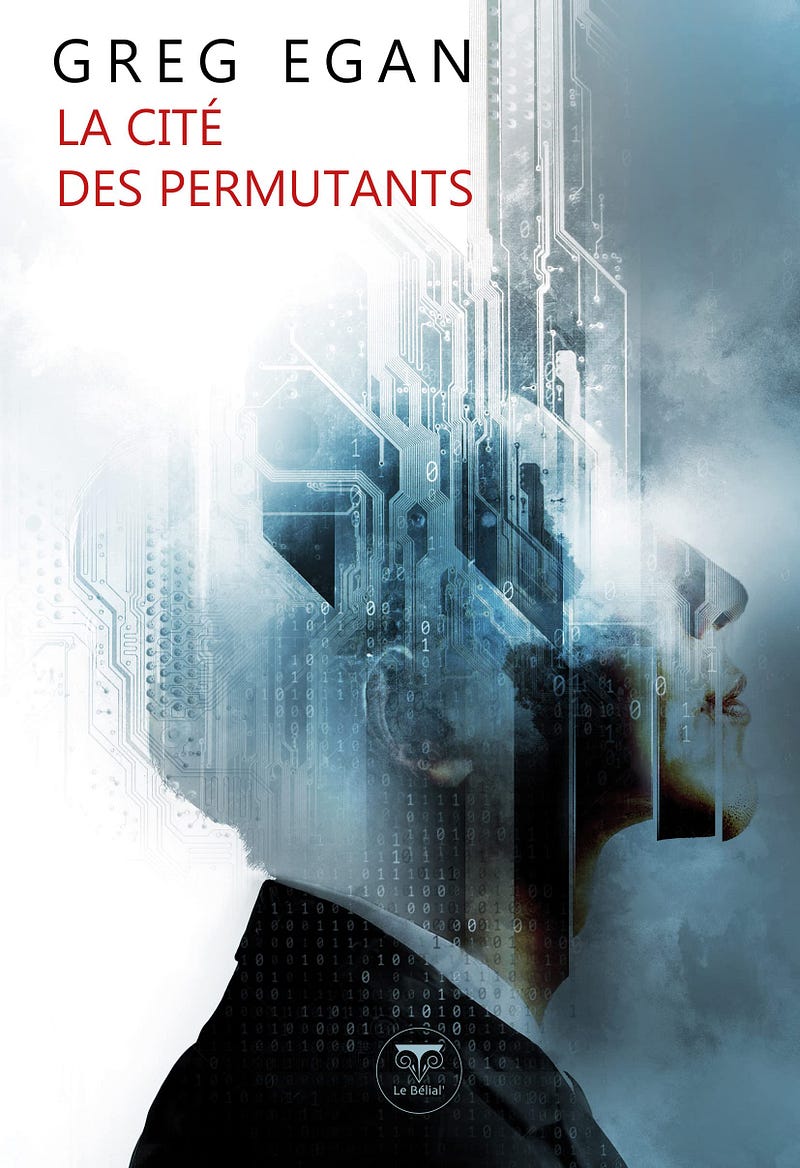
After these few successful experiences with science fiction, I wanted to venture a little further, into “hard SF”, toward one of its great classics, and I wasn’t disappointed.
The story begins in 2045: the rich now have the ability to scan their brains to duplicate their personality within a virtual environment. The conscious entity thus created is indistinguishable from the original human being, and from its own point of view, it is even the direct continuation of who it was. These “people” have therefore virtually achieved immortality through silicon chips, and can therefore, as in The Sims, reshape at will their appearance, their environment, but also their skills, personality, and memories.
However, in the real world, the climate crisis is raging, and geoengineering work requires more and more computing power, which comes to compete with the use made of it by the elites and their virtual doubles. Even though their rights are still protected, and they still own enough assets in the real world to fund their infrastructure, the moment is approaching when the real world will preempt these servers. And therefore, de facto, put their lives on pause.
Until the day when Paul Durham, a genius computer scientist, discovers that it is possible to make a virtual universe exist without any physical substrate, and to migrate all the virtual doubles into it, to protect them from the real world.
Why should you read this book?
Given the recent and sudden explosion of generative AI, the creation of virtual doubles is no longer so far-fetched. And the competition over the use of computing power is more and more topical. For a book published in 1994, that’s quite a feat! This book presents a real philosophical and technical challenge. Without solid scientific knowledge, you’ll have a hard time grasping all the subtleties of the world built by the author. But once past these difficulties, you enter a coherent and relentless world that will call into question your understanding of consciousness and of the individual.
5. La valse des âmes [The Waltz of Souls] — Bernard Werber
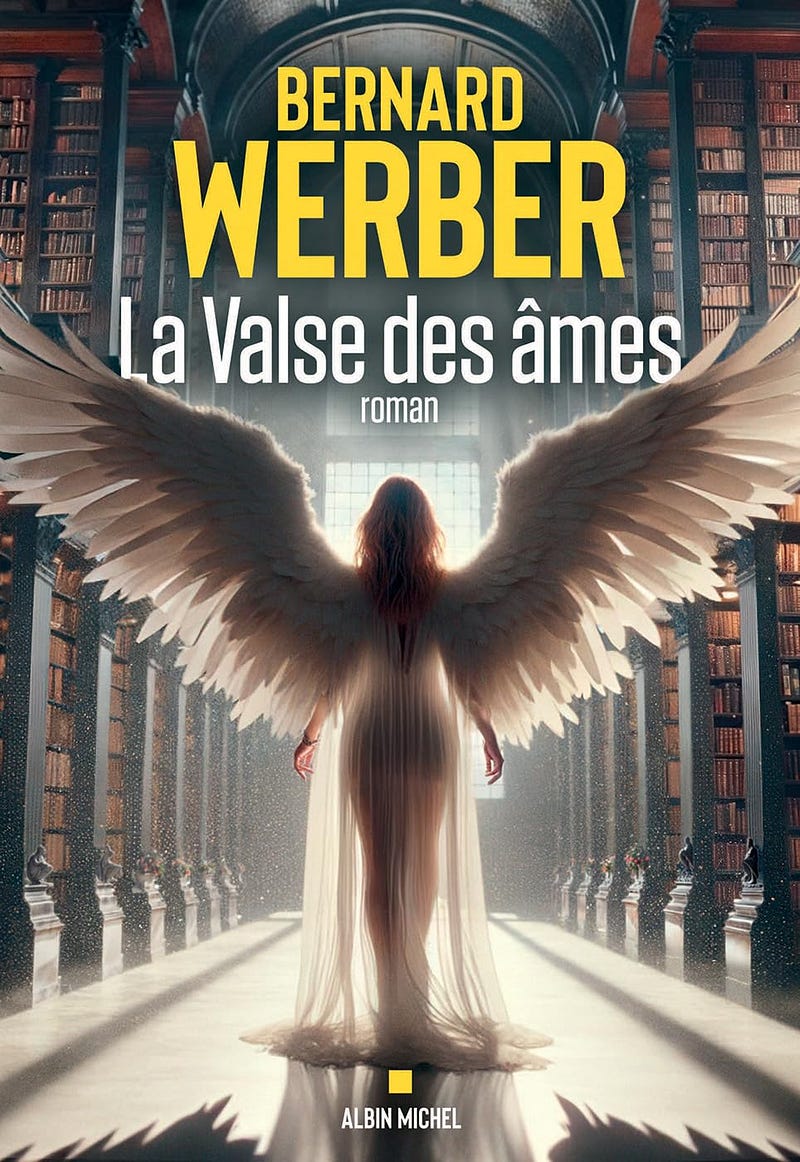
A monument of French literature since the Empire of the Ants saga (which I warmly recommend!!), Bernard Werber takes us this year into a thousand-year-old conflict.
Imagine: you discover a meditation technique that lets you relive each of your past lives. You can relive the great moments of humanity that your soul went through: the invention of writing, the building of the pyramids, the spread of Greek philosophy…
That is the secret that Eugénie, a student at Sciences Po, discovers while her mother is hospitalized in critical condition. And it is during her 1st reincarnation that she learns that 5 souls have joined forces against her soul and 4 others, with the aim of spreading chaos, violence, and aggression.
What follows is a conflict, from reincarnation to reincarnation, over the trajectory of humanity.
Why should you read this book?
Because this book is part of the BWU, the Bernard Werber Universe, where since 1991 the characters have been moving forward, loving each other, and fighting for the salvation of humanity, amid angels, cycles of reincarnation, and gods. With this book, Bernard Werber offers an ode to wisdom to help us navigate between conflicts and incitements to hatred:
Everything we build for the well-being of humanity, science, spirituality, the freeing of slaves, equality between men and women, respect for nature, vegetarianism, can be hijacked by ill-intentioned minds to enslave and destroy.
So do not hand over your knowledge too quickly to those whose hearts are too fiery, to political or religious fanatics, or worse still, to those who are both at once. Respect all forms of life.
The solution lies not in growth but in balance. In all things, seek the happy medium, harmony, the perfect measure.
And this will be my conclusion for 2024 and my wish for your 2025:
The solution lies not in growth but in balance. In all things, seek the happy medium, harmony, the perfect measure.