Lockdown restrictions are starting to lift, and a return to normal is expected in the coming weeks or months, depending on the company. It is time to take stock of the practices that teams within IT departments have put in place, and to look at how they can be made to last.

What was the impact of lockdown on IT teams?
Unsurprisingly, the impacts varied widely depending on the teams’ level of autonomy and maturity:
- Agile, well-equipped, self-organized teams saw remote work as a godsend to refocus on their core activity and become even more efficient
- Less mature teams often went through some paralysis and struggled to maintain their pre-pandemic level of activity
A lot has already been written about how to become more efficient when working remotely: organizing recurring meetings to share information, promoting transparency on activities, clarifying the team’s objectives, setting aside time slots for informal discussion, avoiding exchanges at lunchtime, in the evening…
But none of these good practices are specific to Covid-19. They were already being shared by consultants and various organizational coaches, and they were already valid before March 2020.
What has lockdown changed?
The lockdown measures acted as a catalyst: less mature teams had to quickly adopt new ways of working. Agile principles, sometimes criticized or ignored, saw renewed interest as a way to respond to the uncertainties and constraints of lockdown: working in shorter cycles, encouraging a sustainable pace of development, regularly prioritizing according to the customer’s needs.
With the end of lockdown drawing near, how can we make sure that these good practices, sometimes put in place through pain, are not “forgotten” with the return to the office? How can we make sure that teams don’t go back to their “good old habits”?
Two approaches should be considered: the local dynamics of the team, and the organization as a whole.
At the team level, for each new practice adopted during lockdown, the challenge is to assess its impact on the team’s dynamics and on its efficiency.
We created a shared progress board on Klaxoon, where everyone gave visibility on their activities. What was the benefit for the team? Is it a practice worth keeping?
All the team members now talk every morning in a synchronization meeting. To what extent does this way of working bring us value?
We set up weekly virtual happy hours, whereas we used to have very few drinks together before. What approach should we take as lockdown ends?
After this first step of retrospection, the team must show insight to determine which practices to keep, and courage to then effectively add them to its routines.
There are no simple answers, because every situation is unique: the same practice can make sense for one team but bring little value to another. In this context, managers must also show temperance: forcing the continuation of temporary practices that would no longer make sense once things are back to normal risks aggravating tensions.
The impacts on the organization
These reflections must not stay at the team level: major changes have been made at every level of the organization.
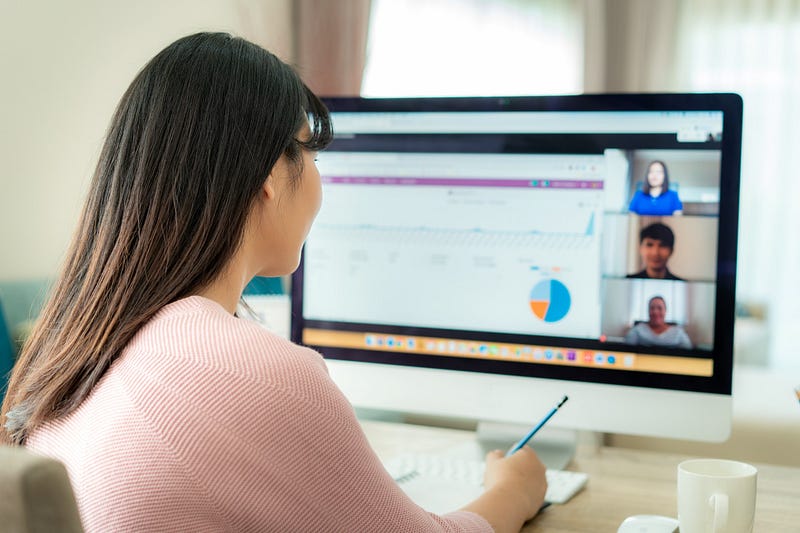
The main impact is of course remote work. This measure, which often had a bad image among employers, is now the new norm. All the technical, legal and organizational barriers were lifted out of the necessity of lockdown. The same retrospection work is needed with all employees.
Was a loss of efficiency really observed? Should remote work now be allowed 1, 2, 3 days a week? Every day?
Throughout this crisis, management teams have also increased the pace of their communications to employees to give them more visibility. They have often shown more transparency by regularly recalling the values that drove their decisions, and this new closeness is welcomed by employees. Should these regular communications be maintained after lockdown? How can these values continue to be used in the future to rally employees around a common vision?
PwC has faced all these issues, and our many client engagements have allowed us to identify the patterns that help companies maintain their innovative practices.
These moments of collective reflection are essential for teams and management to understand their mistakes and their successes, and to set up a dynamic of continuous improvement as lockdown ends.
This retrospective mechanism is a key component in reaching the Holy Grail of management: becoming a learning organization.