Every year, several thousand “non-fiction” books are published in France. This genre covers the following themes: art, culture, society, nature or, more generally, all books related to knowledge. Within this very broad universe, one category has particularly exploded in recent years: management, business and self-help books. Faced with so much content, how do you separate the wheat from the chaff?
How do you judge the quality of a management book? its value?

A first criterion: “the quality of the content”
Before starting to write their book, an author begins by gathering and organizing their knowledge. Their goal is to pass on knowledge and to open up new perspectives for their readers. The author must themselves be competent, and an expert on the subjects they write about.
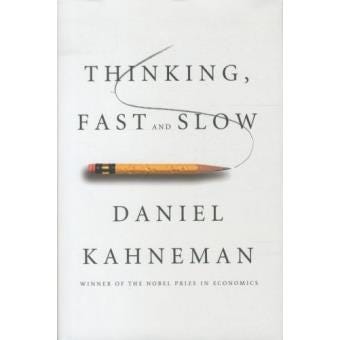
A book that can serve as a benchmark for the quality of its content is Thinking Fast and Slow by Daniel Kahneman. In this book, Dr Kahneman sums up his entire 40 years of scientific research. He describes, for example, our different modes of thinking, the limits of homo economicus, as well as the biases that prevent us from seeing the world and reacting to it as it really is. As an eminent psychologist and Nobel laureate in Economics, Dr Kahneman offers a book with very rich content and real analytical depth, validated by his peers.
But the quality of the content is not enough to say that a book is good; an important dimension is missing: the reader.
A second criterion: “our understanding of the book”
Beyond the quality and relevance of the content, a good book also depends on how we receive it. The author must strive to make their book readable and understandable. Transcribing complex knowledge directly, without any effort to synthesize it, will make the book indigestible.
Of course, the author cannot satisfy all their readers: between the novice and the expert, expectations differ. Targeting a given audience, choosing a suitable level of complexity and marketing the book accordingly are essential steps to make sure readers have clearly identified the level of expertise required before buying a book.
A good example of a misjudgment is The age of EM(ulation): work, love and life when robots rule the earth by Robin Hanson, which I read a few months ago.
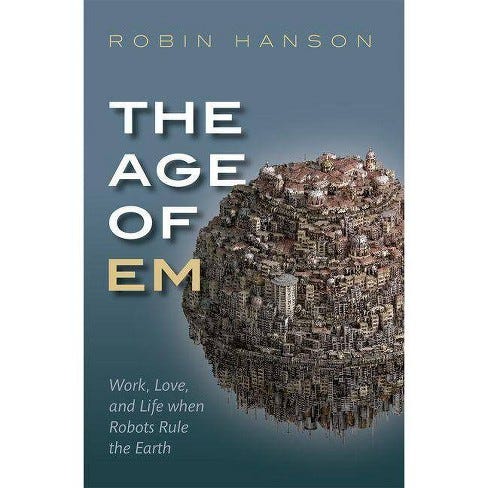
In it, the author describes what a society made up solely of Artificial Intelligences would look like. The great singularity has arrived, machines and emulations reign supreme, and humans have become literally irrelevant. The book then explains in detail the social relationships between AIs, their economic activities, their pastimes, as well as their reproductive activities… Despite very rich and interesting content, the book was very painful for me to read. The level of complexity the author offered exceeded my skills and my capacity for abstraction.
A good book would therefore be a book with quality content, suited to our level of expertise, and which therefore lets us easily understand the author’s thinking.
But these criteria are not enough, and they forget the main reason that drives us to read this kind of book.
A third criterion: “putting it into action”
“Why do we read management or self-help books?”
What motivates us to invest 5 or 10 hours of our time in a book? Is it simply the desire to learn new things?
Yes, we read these kinds of books to learn. But above all we read them because we believe they can improve our lives.
And that is rarely the case: reading a book is not enough to become better. It isn’t even a necessary condition.
It is indeed much easier to open a new book hoping it will trigger a breakthrough in our life than to put the new concepts we’ve learned into practice. If reading is not accompanied by concrete application, this invested time becomes wasted time. Just as much as watching a series to unwind.
And that is the great strength of Victor Ferry’s first book, 12 leçons de rhétorique pour prendre le pouvoir [12 Lessons in Rhetoric to Seize Power]. The structure is fairly linear and didactic. The prose is polished, with a few well-crafted punchlines, just like in his YouTube videos.
![12 leçons de rhétorique pour prendre le pouvoir [12 Lessons in Rhetoric to Seize Power] — Victor Ferry](/medium/0-CjLrp_0p9EyUUxrK.jpg)
But the book manages to push us into action within the first 15 pages. It puts us face to face with our contradictions:
- Who has never wanted to change things, assert themselves and take back power over what surrounds them?
- And then, after a few belligerent impulses, sat back down on their couch in front of Netflix or a video game?
By pointing the finger at our weaknesses, our contradictions and our inconsistencies, Victor Ferry manages to push us into action, to wake us up for the causes that seem important to us.
His book is a bit like a coach’s pep talk at halftime of an American football game:
It becomes a means of reaching a bigger, stronger idea:
Winning a game against the Kansas City Chiefs, or standing up to change your life.