Since March 2020, COVID 19 has turned our lives upside down. The government, along with all healthcare stakeholders, is managing an unprecedented crisis that is likely to last many more months. Whatever our age, social situation, or occupation, we all see the impacts of COVID 19 every day.
What if we used agile principles to analyze the French government’s response to COVID-19?

Managing the COVID crisis “the agile way” makes sense for 4 reasons:
- Volatility: the situation changes fast and calls for continuous responses
- Uncertainty: even though a few models exist, it is hard to anticipate how the pandemic will evolve
- Complexity: many parameters influence the spread of the virus, and how French society reacts to it
- Ambiguity: it is hard to get a clear and precise picture of what is happening on the ground, despite all the indicators
We could then compare the fight against the coronavirus to a very large-scale project in which we are all stakeholders. The government would play the role of Product Owner by prioritizing the activities of its administration and medical staff (the agile team) to satisfy the French population (the customers).
Note 1: To compare the French government’s actions with the market’s agile canons, we will use the 17 principles set out in the Disciplined Agile Manifesto, which are more generalizable outside IT than those of the original Agile Manifesto.
Note 2: The goal is not to get into a partisan political debate, but rather to analyze the French government’s choices and actions since February 2020 through the lens of agility. Only two ratings are used: “Satisfactory” or “Could do better.”
Assessments
1. Our highest priority is to satisfy stakeholders by delivering valuable solutions to them early and continuously.
Many French people criticize the government’s actions and choices. In an international poll last May, the French gave the government’s response a score of 4.1/10. Moreover, the recent choices of curfews and bar closures, while keeping schools open, give a few clues about the government’s priorities: health and the economy. Decision-makers prefer to bet on the long term rather than on the immediate satisfaction of the French people. Assessment: Could do better
2. Welcome emerging requirements, even late in the solution delivery lifecycle. Agile processes harness change for the customer’s competitive advantage.
Last January and February, the government was slow to grasp the new stakes of COVID 19 and to adapt its priorities. After a long phase of downplaying the risks, saying that this “flu” would not reach France, the government had to rush to revise its priorities, which led to the communication blunders of its spokespeople. Assessment: Could do better
3. Deliver valuable solutions continuously, from several times a day to every few weeks, with the aim of increasing the frequency over time.
Do the administrations and healthcare teams deliver value regularly? Yes, without a doubt. Many innovations have emerged, patients are being treated, and without the continuous efforts of all these players, the situation would be much worse today. Assessment: Satisfactory
4. Stakeholders and developers must actively collaborate to achieve outcomes that will delight our organization’s customers.
The Scientific Council, along with the heads of the health services, has been working with the government since the beginning of the year to provide solutions for the French people: relieving overwhelmed hospitals by transferring patients between regions, regularly adapting health measures to the level of the epidemic. The Scientific Council has, by the way, just been made permanent. Assessment: Satisfactory
5. Build teams around motivated individuals. Give them the environment and support they need, and trust them to get the job done.
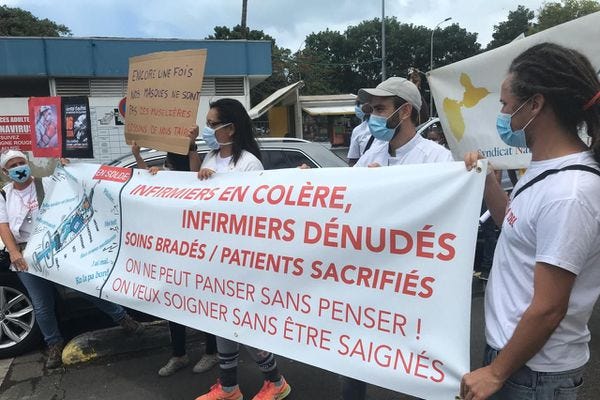
Do the healthcare teams and administrations really have the environment and equipment they need to carry out their activities? At the start of the crisis, doctors and nurses criticized the lack of masks available to them. The recent strikes by hospital staff indicate more broadly that there is certainly still work to be done to build an environment that allows them to do their job properly. Assessment: Could do better
6. The most effective method of conveying information to and within a delivery team is face-to-face conversation, ideally around a whiteboard.
We have seen some changes in the government’s communication in recent months. Olivier Véran, the Minister of Health, for example, started drawing curves to clarify the objectives of the health measures.
More broadly, the principles of marketing and political communication also explain that it is better to communicate face to face to get a message across. With the government’s many field visits and frequent media appearances, this principle is therefore largely met. Assessment: Satisfactory
7. Continuous delivery of value is the primary measure of progress.
Every day, the number of hospital admissions and discharges, of ICU admissions and discharges, and the number of tests performed are used to guide the government’s choices and actions. These are indeed indicators of the value generated by the health services. Assessment: Satisfactory
8. Agile processes promote sustainable delivery. The sponsors, developers, and users should be able to maintain a constant pace indefinitely.
Can the healthcare system, the economy, and the French population keep up this pace indefinitely? Without a shadow of a doubt, this pace will break the system sooner or later. And that breaking point could come from the exhaustion of hospital staff, from financial markets growing reluctant to keep lending to the French state, from rising unemployment and precariousness, or from the growing exasperation of the French people. The current pace is therefore not sustainable, especially as the reserves of beds, cash, and goodwill are dwindling. Assessment: Could do better
9. Continuous attention to technical excellence and good design enhances agility.
Many studies have been conducted in recent months to better understand COVID and the ways to fight this epidemic. We can see a constant quest by healthcare teams and scientists to optimize health protocols and limit contagion. In a few months, every store and every point of contact with the public has been redesigned down to the smallest detail to accommodate COVID constraints. Assessment: Satisfactory
10. Simplicity — the art of maximizing the amount of work not done — is essential.
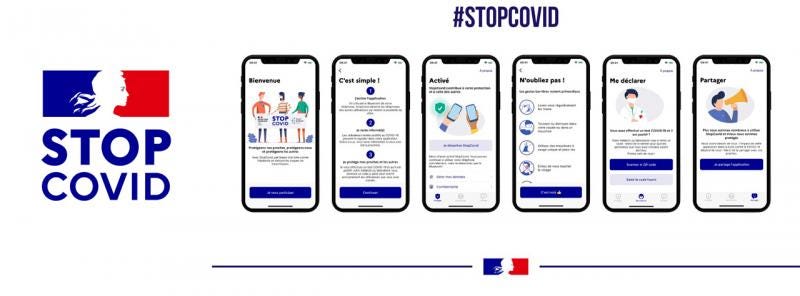
Unfortunately, not everything the government has done has produced concrete and effective results in the fight against COVID 19. For example, despite the millions of euros spent, the “StopCovid” app was a failure in the fight against the coronavirus. The contradictory instructions about masks also add to this waste of time and energy by the government and the administrations. Assessment: Could do better
11. The best architectures, requirements, and designs emerge from self-organizing teams, thanks to roadmaps and organizational support.
Decentralization and self-organization are increasingly a reality in the fight against the coronavirus. Even though many decisions remain in the government’s hands, local authorities can, to some extent, adapt how the fight against the coronavirus is carried out. Moreover, after its first authoritarian and prescriptive messages, the government now prefers to appeal to the French people’s sense of responsibility regarding protective measures or the “rule of six.” Assessment: Satisfactory
12. The team constantly reflects on how to become more effective, then experiments, learns, and adjusts its behavior accordingly.
Two elements help validate this Agile principle:
- the critical report on the government’s actions is a first step toward setting up an improvement cycle
- the “Test & Learn” approach adopted for the curfew, planned for 6 weeks, which will be renewed or not depending on the results of the experiment
Assessment: Satisfactory
13. Leverage and evolve the assets within your organization, collaborating with the people responsible for those assets to do so.
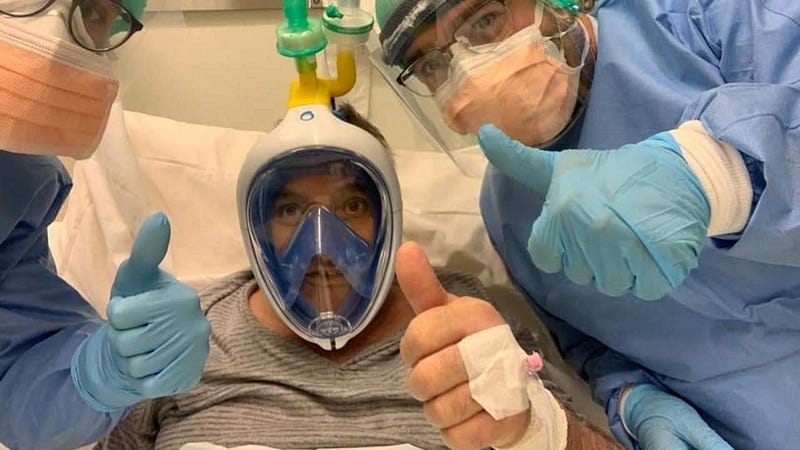
The clothing and pharmaceutical industries, as well as many other partners, have redirected their activities to meet the needs of the government and the French people. One example is Decathlon, which made its masks available to help health services short on equipment. Many textile companies have also designed and distributed masks to supplement the supply of cotton masks. Assessment: Satisfactory
14. Visualize work to produce a smooth delivery flow and keep work in progress (WIP) to a minimum.
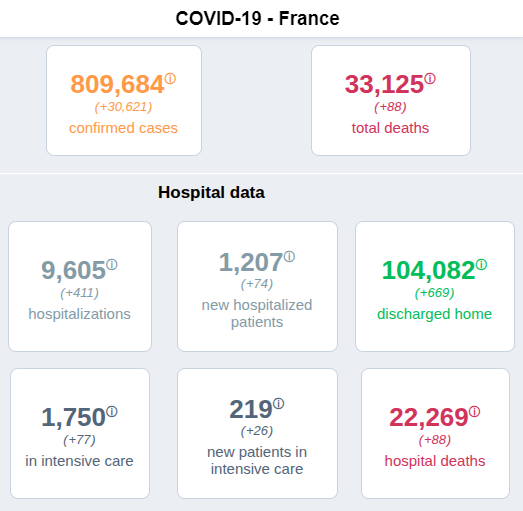
Many metrics are analyzed to ensure the continuity of health services:
- the number of available ICU beds
- the number of available hospital beds
- the number of clusters, as well as the positivity rate of the tests performed
As for the notion of MVP, it was visible in the travel certificates introduced during the lockdown last March. The first ones were rudimentary and paper-only, while digital versions were made available a few weeks later. Assessment: Satisfactory
15. Evolve the entire enterprise, not just individuals and teams, to support agile, non-agile, and hybrid teams.
Beyond the administration and health services, the whole country has rethought the way it works because of the COVID crisis. Remote work, once the exception, is now the rule several days a week for many French people. And these innovative practices, developed during the crisis, will certainly take root in our habits and last. Assessment: Satisfactory
16. We measure our work and its outcomes, preferring automated metrics over manually gathered ones, to make data-driven decisions.
Many measurements exist, are shared daily, and make it possible to adapt the government’s actions:
- the number of new cases
- the number of deaths
- the number of clusters
Despite the initial problems with data reporting from nursing homes, there is no longer any shortage of measurements of how the epidemic is progressing. Assessment: Satisfactory
17. We provide complete transparency to our stakeholders in everything we do and produce, to enable open and honest conversations and effective governance of our team
Despite the government’s many announcements, it is hard to claim that the French people are kept informed of everything that is being done, or that honest conversations are taking place. Between the communication problems at the start of the crisis and the sudden announcements of lockdowns or curfews, with no possibility of debate in the National Assembly, this Agile principle is not respected. Assessment: Could do better
Results
Out of the 17 Agile principles analyzed, the government, as Product Owner of the COVID 19 crisis, scores 11, a 65% success rate.
It’s a good start: it shows a certain willingness to adapt its way of working to the specifics of COVID in order to be more responsive. But the French government still has plenty of room for improvement before it becomes a good Product Owner.